
About ActiveCare Physical Therapy®
The Best Physical Therapists in NYC
-
Our therapists are licensed in New York State and active members in the American Physical Therapy Association. We have advanced training in joint mobilization and myofascial release techniques.
-
We are dedicated practitioners with a passion for the profession and a comprehensive, holistic approach to treatment and healing. We treat each patient as an individual and treat the whole person, with a plan of care designed to meet the patient’s set goals for health, functionality and a return to work, tasks and activities. We network with a team of physicians, chiropractors, acupuncturists and massage therapists in order to provide guidance to other modalities that may be effective in the patients’ care. We also offer superior Telehealth services for physical therapy.
-
Physical Therapist and owner Dr. Karena Wu PT, DPT, OCS is a graduate of the Program in Physical Therapy at Columbia University and is affiliated with several healthcare organizations in New York City. She is certified as a Strength and Conditioning Specialist, Kinesio Taping Practitioner and Pilates Instructor, and uses SpiderTech Taping. She is also a Certified Orthopedic Manual Therapist, Strength and Conditioning Specialist, Graston Technique® Specialist and Pilates Instructor. She holds LSVT BIG, FMS and SFMA Level 1 certifications as well. Dr. Wu also specializes in vertigo and temporomandibular joint disorders.
-
ActiveCare is primarily an out-of-network facility. We accept all insurance with out-of-network benefits and file for most major insurance plans. We work with all prospective patients to create workable payment plans regardless of insurance coverage.
-
ActiveCare accepts Medicare, No-Fault and Workers Compensation patients depending on schedule availability.
-
ActiveCare’s administrators provide seamless and efficient concierge-style client service to all of our patients. And the whole ActiveCare team makes sure your time with us is a beneficial, productive and enjoyable experience.
Quick Links
Manual Therapy Bursitis Plantar Fascitis Meniscus Tears Labral Tears Kinesiology Taping Pilates Rehab
Visit Our Main Website:
www.ActiveCarePhysicalTherapy.com
Blog Posts Are Below:
* We Accept Medicare | No Fault | Workers Comp *
Category Archives: Back Pain
Exercises to Help Relieve Back Pain and Stiffness
In this post, we’ll explore effective at-home exercises to help relieve back pain and stiffness. Back pain and stiffness are common issues that many people experience due to various factors such as poor posture, sedentary lifestyle, and muscle imbalances. Incorporating specific exercises into your routine can help alleviate discomfort, improve flexibility, and strengthen the muscles that support your spine.
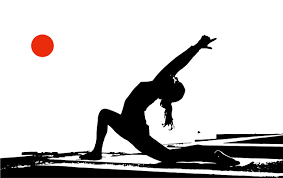
1. Cat-Cow Stretch
The Cat-Cow stretch is a gentle yoga exercise that helps improve spinal flexibility and relieve tension in the back muscles.
How to Perform:
- Start on your hands and knees in a tabletop position with your wrists directly under your shoulders and your knees under your hips.
- Inhale as you arch your back, lifting your head and tailbone toward the ceiling (Cow position).
- Exhale as you round your back, tucking your chin to your chest and drawing your belly button toward your spine (Cat position).
- Repeat the movement for 10-15 repetitions, flowing smoothly between each position.
2. Child’s Pose
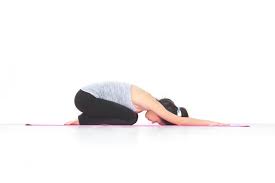
Child’s Pose is a restorative yoga pose that gently stretches the lower back and hips, providing relief from stiffness and tension.
How to Perform:
- Start on your hands and knees in a tabletop position.
- Sit back on your heels and stretch your arms forward, lowering your forehead to the floor.
- Hold the pose for 30 seconds to 1 minute, breathing deeply and allowing your back to relax.
3. Pelvic Tilts
Pelvic tilts help strengthen the lower back and abdominal muscles while promoting spinal mobility.
How to Perform:
- Lie on your back with your knees bent and feet flat on the floor, hip-width apart.
- Flatten your lower back against the floor by tightening your abdominal muscles and tilting your pelvis slightly upward.
- Hold the position for a few seconds, then release.
- Repeat the exercise for 10-15 repetitions.
4. Bridge Exercise
The bridge exercise strengthens the glutes, hamstrings, and lower back muscles, helping to support the spine and alleviate pain.
How to Perform:
- Lie on your back with your knees bent and feet flat on the floor, hip-width apart.
- Press through your heels and lift your hips toward the ceiling, squeezing your glutes at the top.
- Hold the position for a few seconds, then lower your hips back down.
- Repeat the exercise for 10-15 repetitions.
5. Seated Forward Bend
The seated forward bend stretches the lower back, hamstrings, and calves, helping to relieve tension and improve flexibility.
How to Perform:
- Sit on the floor with your legs extended straight in front of you.
- Inhale and lengthen your spine, then exhale as you hinge at your hips and reach forward toward your feet.
- Hold the stretch for 30 seconds to 1 minute, breathing deeply and allowing your back to relax.
6. Knee-to-Chest Stretch
The knee-to-chest stretch gently stretches the lower back and glutes, providing relief from stiffness and discomfort.
How to Perform:
- Lie on your back with your knees bent and feet flat on the floor.
- Bring one knee up toward your chest, holding it with both hands.
- Hold the stretch for 20-30 seconds, then switch to the other leg.
- Repeat the stretch 2-3 times on each side.
7. Spinal Twist
The spinal twist helps improve spinal mobility and relieve tension in the lower back.
How to Perform:
- Lie on your back with your knees bent and feet flat on the floor.
- Extend your arms out to the sides in a T position.
- Slowly lower both knees to one side while keeping your shoulders flat on the floor.
- Hold the stretch for 20-30 seconds, then switch to the other side.
- Repeat the stretch 2-3 times on each side.

Exercises to Help Relieve Back Pain: Conclusion
Incorporating these at-home exercises into your daily routine can help relieve back pain and stiffness, improve flexibility, and strengthen the muscles that support your spine. Remember to perform each exercise with proper form and control, and consult with a healthcare professional if you have any concerns or underlying conditions. By staying consistent with these exercises, you can enjoy a healthier, more comfortable back and overall well-being.
Contact Information
ActiveCare Physical Therapy™
29 West 38th Street, Suite 601
New York, NY 10018
Phone: (212) 777-4374
Email: staff@bestptnyc.com
Website: https://activecarephysicaltherapy.com/
Lupus and Back Pain: Understanding the Connection and Finding Relief
 In this post, we’ll explore the relationship between lupus and back pain, the potential causes, and strategies for managing and finding relief from this challenging symptom. Lupus, a chronic autoimmune disease, can affect various parts of the body, including the musculoskeletal system. While lupus primarily targets the skin, joints, and organs, it can also lead to back pain and discomfort.
Understanding Lupus
Lupus is an autoimmune disease where the immune system mistakenly attacks healthy tissues and organs. While the exact cause of lupus is still not fully understood, genetics and environmental factors are believed to play a role in its development. Common symptoms of lupus can include joint pain, skin rashes, fatigue, and inflammation of various organs.
Lupus and Back Pain
Back pain in individuals with lupus can occur for several reasons:
1. Inflammation of Joints and Tissues
Lupus-related inflammation can affect the joints and soft tissues of the spine, leading to pain and discomfort.
2. Kidney Involvement
Lupus nephritis, a complication of lupus, can cause lower back pain if the kidneys are affected.
3. Medication Side Effects
Certain medications used to manage lupus, such as corticosteroids, can lead to bone loss and increased susceptibility to back pain.
Symptoms
Back pain in lupus patients can manifest in various ways, including:
- Dull, aching pain in the lower back.
- Stiffness and limited mobility.
- Pain that radiates to other areas of the body.
It’s crucial to distinguish lupus-related pain from other potential causes, such as herniated discs or spinal arthritis. A thorough evaluation by a healthcare professional is essential for an accurate diagnosis.
Managing and Finding Relief
If you’re experiencing back pain as a result of lupus, there are steps you can take to manage the discomfort and improve your quality of life:
1. Medication Adjustment
Consult with your rheumatologist to discuss any medication-related side effects contributing to back pain. They may adjust your treatment plan to minimize these effects.
2. Physical Therapy
Physical therapy can be highly beneficial for lupus patients. Therapists can provide exercises and techniques to improve posture, strengthen the muscles supporting the spine, and increase flexibility.
3. Pain Management
Over-the-counter or prescription pain medications may help alleviate back pain. Your healthcare provider can recommend the most suitable options based on your condition.
4. Lifestyle Modifications
Maintain a healthy lifestyle by incorporating regular exercise, a balanced diet, and stress management techniques into your daily routine.
5. Heat and Cold Therapy
Applying heat or cold packs to the affected area can provide temporary relief from pain and inflammation.
6. Supportive Measures
Using supportive devices like ergonomic chairs and pillows can improve posture and reduce strain on the back.
Conclusion
Back pain is a challenging symptom for individuals, but it can be managed effectively with the right approach. If you’re experiencing lupus-related back pain, it’s essential to work closely with your rheumatologist and consider the benefits of physical therapy. By addressing the underlying causes and adopting appropriate strategies, you can find relief and enjoy an improved quality of life despite living with lupus.
If you have questions or need assistance in managing lupus-related back pain, consider reaching out to a healthcare professional or physical therapist, such as those at ActiveCare Physical Therapy™.
Poor Posture & Low Back Pain
Low back pain affects two-thirds of the population at some point in a person’s life. It is a primary cause of missed work and is the leading cause of disability on a global scale. The low back is an integral part of the foundation of the body. This region is made up of the low back or lumbar spine and the pelvis. The core muscles are in this area and are made up of four muscles: the diaphragm at the top, the pelvic floor at the bottom, the transverse abdominis in the front and the multifidus in the back. Most people do not realize that the core reflects this many muscles and how it needs to work well with the skeletal bones in order for the entire postural chain to be working at its best.
The Impact of Poor Posture
Posture has a major impact in health and wellness. Poor posture can contribute to issues with the cardiac system, the respiratory system, the digestive system, the metabolic system, the psychological system and the musculoskeletal system. It affects everything! Our posture starts from the core and making sure the low back and pelvis are in the correct position is crucial for the entire kinetic chain. Many conditions can be caused by poor posture being a major contributing factor.
Holistic Physical Therapy for Poor Posture
Dr. Karena Wu and her Team at ActiveCare Physical Therapy work holistically using digital feedback and a copyrighted methodology developed by Dr. Wu to demonstrate to the client their posture in space. The FIT3D body scanner is a useful tool to show patients how they look and where they hold their weight. New clients can take advantage of this body scan even if they are not in physical therapy and patients can get regular scans to demonstrate change.
Dr. Wu’s copyrighted methodology in holistic physical therapy has the therapists ‘walking their way to the injured segment’. That means starting distant to the injury, assessing and treating parts of the kinetic chain and making their way to the injury. The reason for this is that the change in the injury or condition can be faster and have a longer carryover between treatment sessions. We emphasize the core or foundation of the body. The patients are made aware of the other areas of their bodies that might be impacting their symptoms. Dr. Wu trains her team of physical therapists to use this approach to bring about the best results for their patients.
Following is an article written by Dr. Wu for Physiotimes India. As an international healthcare expert, Dr. Wu discusses poor posture globally and offers tips and tricks to help maintain your best upright posture. Please enjoy the article and feel free to share it with anyone you think needs to improve their posture in our modern, sedentary and oftentimes seated world.
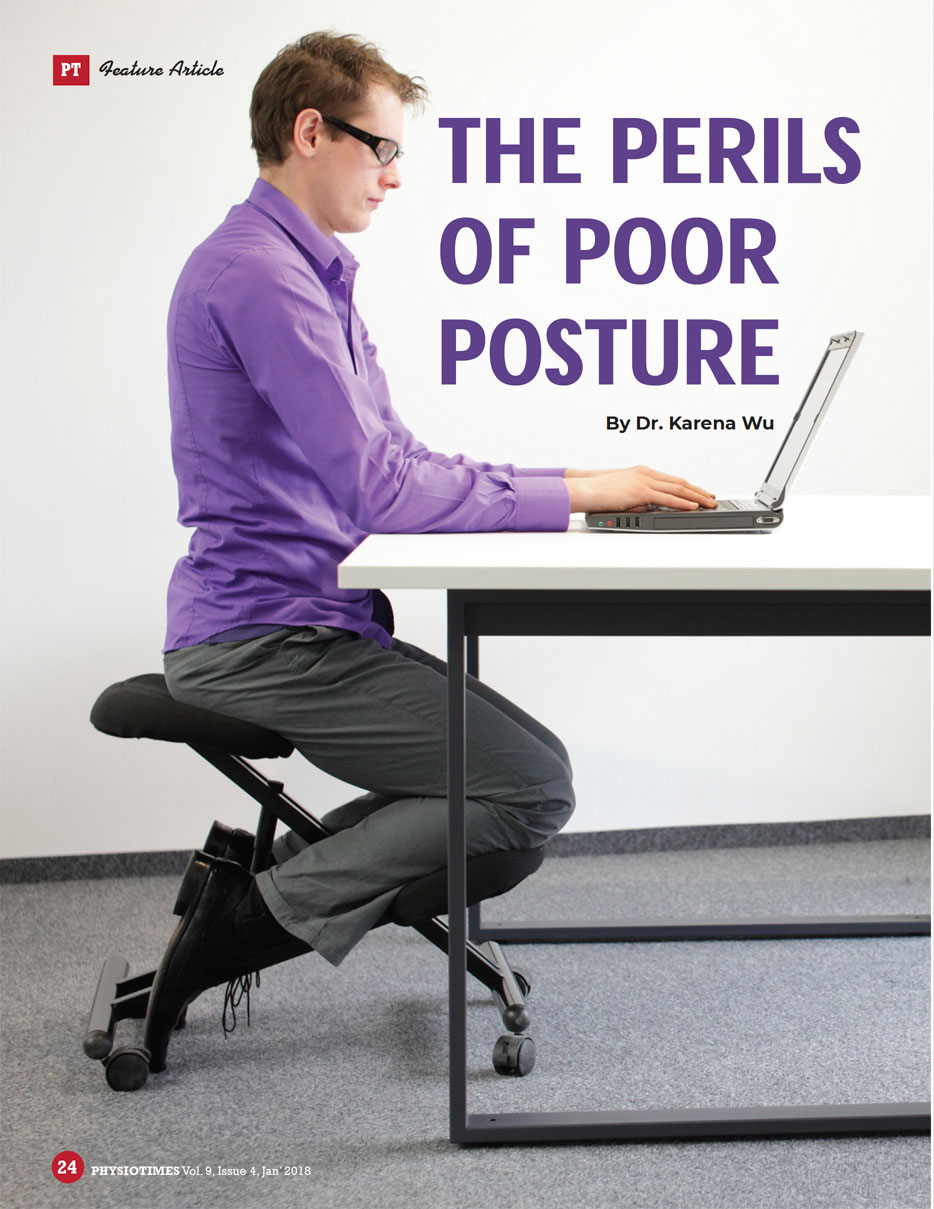
The Perils of Poor Posture by Karena Wu
We hope you enjoy this story!
Best,
Karena
Low Back Pain from Sitting: Causes, Prevention, and Relief
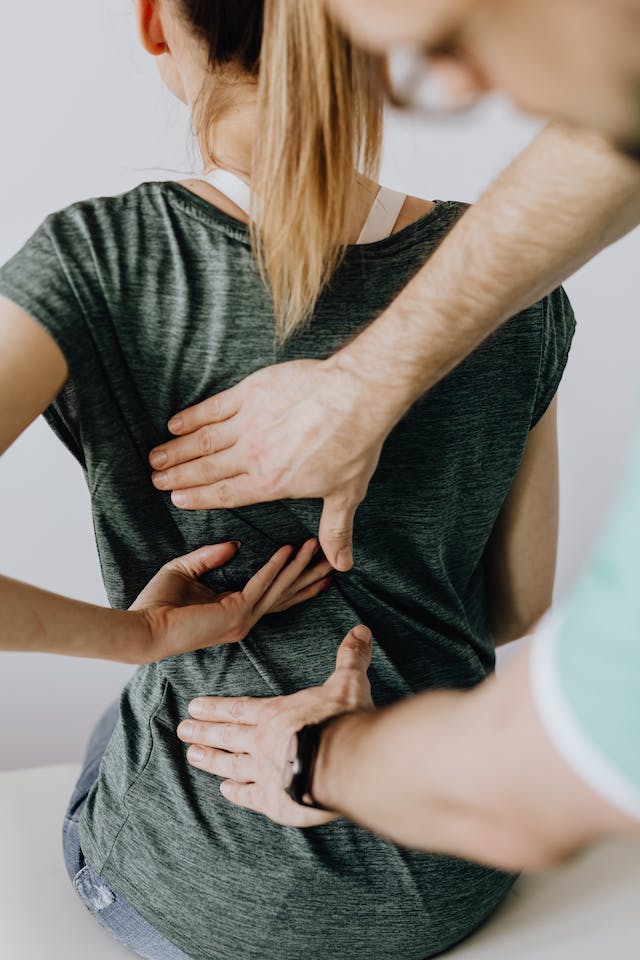 In this post, we’ll explore the causes of low back pain from sitting, strategies for prevention, and methods to find relief. In our modern, sedentary lifestyles, many of us spend a significant portion of our day sitting, whether at a desk, in front of a computer, or during long commutes. Unfortunately, prolonged sitting can often lead to low back pain, a common and uncomfortable ailment that affects millions of people.
Low Back Pain from Sitting: Common Causes
Low back pain from sitting can result from various factors, including:
1. Poor Posture
Slouching or sitting with improper posture can strain the muscles and ligaments in the lower back, leading to pain.
2. Prolonged Sitting
Remaining seated for extended periods without breaks can place continuous pressure on the lumbar spine and its supporting structures.
3. Lack of Movement
Sitting for too long without moving or stretching can cause muscles to become stiff and contribute to discomfort.
4. Ergonomic Factors
Using an unsupportive chair or a poorly designed workstation can increase the risk of low back pain.
5. Muscle Imbalances
Weak core muscles or muscle imbalances in the back can make it more challenging to maintain proper posture while sitting.
Preventing Low Back Pain from Sitting
Prevention is key to avoiding low back pain associated with prolonged sitting. Here are some strategies to help:
1. Maintain Proper Posture
Sit with your feet flat on the floor, knees at a 90-degree angle, and your lower back supported. Use a lumbar roll or cushion if needed.
2. Take Regular Breaks
Stand up, stretch, and walk around for a few minutes every half-hour of sitting to reduce the pressure on your lower back.
3. Use Ergonomic Furniture
Invest in an ergonomic chair and an adjustable desk to create a workspace that supports good posture.
4. Core Strengthening
Incorporate exercises that strengthen your core muscles, as a strong core provides better support for your lower back.
5. Stretching Routine
Regularly stretch your hip flexors, hamstrings, and lower back to maintain flexibility and prevent stiffness.
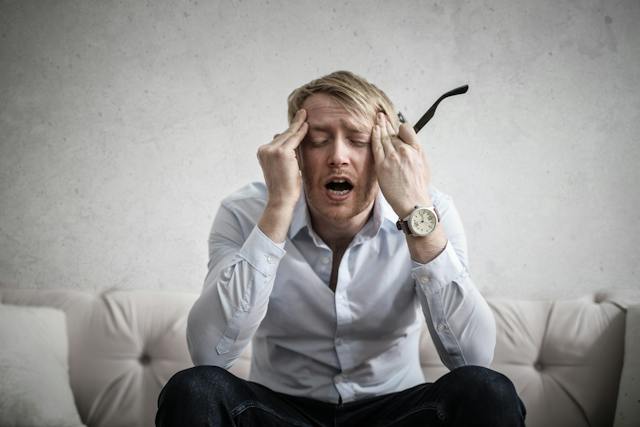
Finding Relief from Low Back Pain
If you’re already experiencing low back pain from sitting, there are several methods to find relief:
1. Ice and Heat
Apply ice to reduce inflammation in the acute phase, and then use heat to relax tense muscles.
2. Over-the-Counter Pain Relief
Non-prescription pain relievers like ibuprofen or acetaminophen can help manage pain and inflammation.
3. Physical Therapy
A physical therapist can provide exercises and stretches to alleviate pain and improve posture.
4. Posture Correction
Learn and practice proper posture techniques to reduce strain on your lower back.
5. Massage and Bodywork
Massage therapy or chiropractic care may offer relief by releasing tension in the muscles and joints.
Low Back Pain from Sitting: Conclusion
Low back pain from sitting is a common issue in today’s sedentary world, but it doesn’t have to be a permanent discomfort. By maintaining proper posture, taking regular breaks, and incorporating stretching and strengthening exercises into your routine, you can prevent and manage low back pain associated with prolonged sitting. If pain persists or worsens, don’t hesitate to seek professional help, such as physical therapy, to address the issue and regain your comfort and mobility.
ActiveCare Physical Therapy in NYC
Dr. Karena Wu and the Team at ActiveCare Physical Therapy in New York City utilize Pilates based rehabilitation. This holistic and core centric exercise is extremely helpful for people with low back pain. We are specialists in the field and have effectively rehabilitated our clientele with this powerful modality. To schedule an appointment, contact us immediately.
Contact us today to learn more about our services and schedule an appointment.
ActiveCare Physical Therapy™
29 West 38th Street, Suite 601
New York, NY 10018
Phone: (212) 777-4374
Email: staff@bestptnyc.com
Website: https://activecarephysicaltherapy.com/
Treating Back Pain with Physical Therapy: What You Need to Know
Of the methods used when treating back pain, is physical therapy an effective option? Back pain is a common problem that can be caused by a wide range of factors, including poor posture, muscle strain, and spinal conditions. If you’re dealing with back pain, you may be wondering if physical therapy can help. In this post, we’ll discuss how physical therapy can be an effective treatment for back pain and what you need to know.
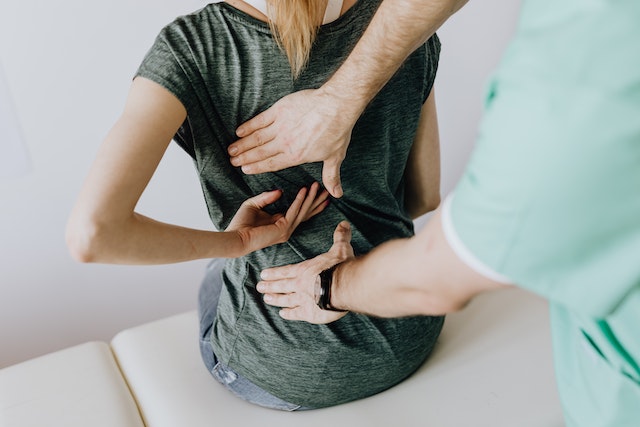
How Can Physical Therapy Help with Back Pain?
Physical therapy can be an effective treatment for back pain for several reasons. First, physical therapists are highly trained healthcare professionals who can evaluate the underlying causes of your pain and develop a customized treatment plan to address your specific needs. Second, physical therapy can help reduce pain, improve mobility and range of motion, and strengthen the muscles that support your back.
1. Evaluation and Diagnosis
The first step in treating back pain with physical therapy is an evaluation and diagnosis. Your physical therapist will perform a comprehensive assessment of your back, including your range of motion, muscle strength, and posture. They may also order imaging tests, such as X-rays or MRI scans, to help diagnose the underlying cause of your pain.
2. Pain Management
One of the primary goals of physical therapy for back pain is pain management. Physical therapists can use a variety of techniques to help alleviate pain, including ice and heat therapy, massage, and stretching. They may also use electrical stimulation or ultrasound therapy to help reduce pain and promote healing.
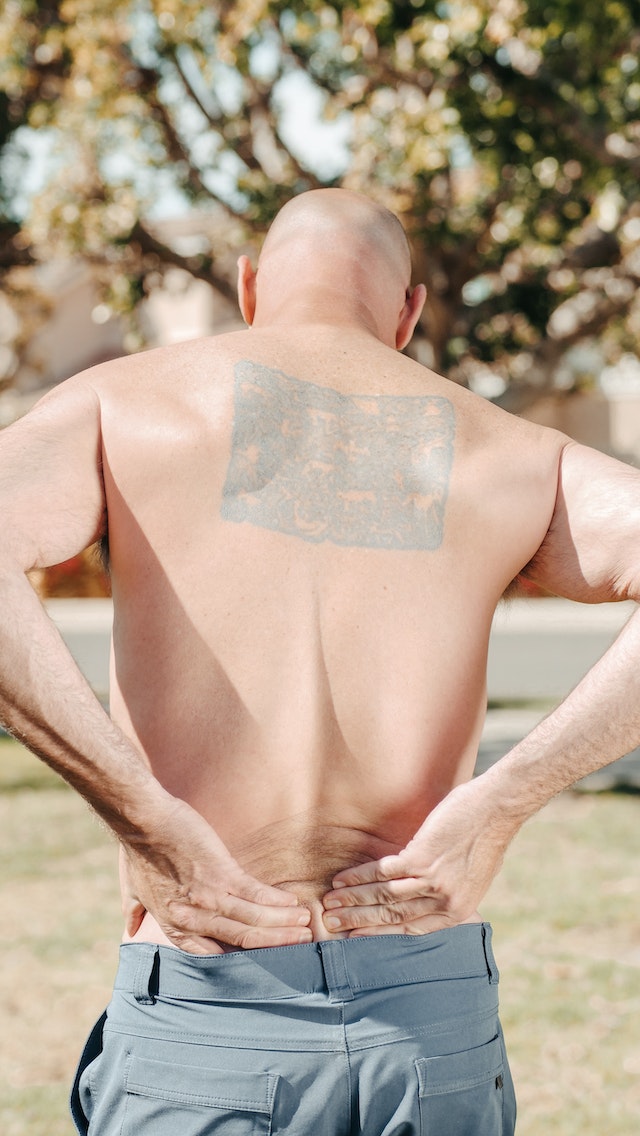
3. Stretching and Strengthening Exercises
Physical therapists may prescribe stretching and strengthening exercises to help improve mobility and reduce pain. These exercises may target specific muscle groups in the back and abdomen, as well as the hips and legs. Strengthening exercises can help improve muscle tone and prevent future injuries, while conditioning exercises can help improve overall fitness and endurance.
4. Manual Therapy
Manual therapy involves hands-on techniques that physical therapists use to mobilize joints and soft tissues. Manual therapy can help reduce pain and improve mobility by loosening tight muscles and joints. Common manual therapy techniques for back pain include joint mobilization, soft tissue mobilization, and myofascial release.
5. Education and Prevention
Physical therapists can provide education and guidance to help prevent future back injuries. This may include advice on proper techniques for lifting and carrying heavy objects, as well as recommendations for appropriate footwear and protective gear. Your physical therapist may also provide guidance on posture and ergonomics to help reduce the risk of back pain.
Why Choose ActiveCare Physical Therapy™?
If you’re looking for a physical therapy practice in New York City to help with your back pain, consider ActiveCare Physical Therapy™. Led by Karena Wu PT, a board-certified clinical specialist in orthopedic physical therapy, our team of physical therapists has extensive experience in treating back pain. We take a personalized approach to treatment, working closely with each patient to develop a customized plan that meets their specific needs and goals.
Treating Back Pain with Physical Therapy: Contact Us
If you’re dealing with back pain and looking for a physical therapy practice in New York City, look no further than ActiveCare Physical Therapy™. With our convenient location in midtown Manhattan, we make it easy to get the care you need. Contact us today to schedule an appointment or learn more about our services.
ActiveCare Physical Therapy™
29 West 38th Street, Suite 601
New York, NY 10018
Phone: (212) 777-4374
Email: staff@bestptnyc.com
Website: https://activecarephysicaltherapy.com/
Physical Therapy For The Back
Do you need physical therapy for the back? If you are suffering from pain in your lower back for more than a couple of weeks, your doctor will recommend going to a physical therapist. Following simple measures like applying something cold or hot, or using pain remedies and OTC drugs may help. However, one of the best methods of improving physical pain is exercising and other similar treatments. These treatments occur under the supervision and guidance of a professional physical therapist.
A physical therapist will try to identify the reason for your back pain. They will also determine what type of pain you are having and if it is chronic or acute pain. They will perform various tests and guide you with proper treatment, depending specifically on your condition.
(Source)
Causes of Back Pain
Our body consists of a complicated structure of bones, discs, tendons, and ligaments. All these work together in supporting the body along and helping us move. The segments of your spine are cushioned with disks that are cartilage-like pads. If you are having trouble with any of these body parts, you may suffer from back pain. However, in some cases, the cause for back pain is unclear.
Strain
Back pain commonly occurs due to strain, injury, or tension. The most common causes of back pain are:
- A muscle spasm
- Strained ligaments or muscles
- Muscle tension
- Falls, fractures, or injuries
- Damaged disks
Activities that are usually responsible for spasms or strains include:
- Lifting something too heavy
- Lifting something improperly
- Making an awkward and abrupt movement
Structural Problems
There are a lot of structural problems that can lead to back pain. Here are some examples:
1. Ruptured Disks
Disks cushion each vertebra in your spine. If your disk ruptures, the pressure will fall on your nerves, resulting in back pain.
2. Bulging Disks
In a similar way as a ruptured disk, bulging disks also cause pain by adding pressure to the nerve.
3. Sciatica
A herniated or bulging disc can sometimes press against your nerve. This building disk can cause a shooting and sharp pain can travel through your buttocks to the back of your leg.
4. Arthritis
Osteoarthritis can lead to issues with the joints in your lower back, hips, or other places. In fewer cases, spinal stenosis can occur, where the space surrounding the spinal cord becomes narrow.
5. Abnormal Spinal Curvature
Your spine may begin to curve in an unusual manner, resulting in back pain. An example of an abnormal curve is scoliosis, in which your spine curves to one side.
6. Osteoporosis
Bones and vertebrae of your spine become porous and brittle, resulting in fractures.
7. Kidney Problems
Kidney infection or kidney stones may cause back pain.
(Source)
Movements and Posture
You may suffer from back pain due to poor posture or everyday activities. For example:
- Twisting
- Sneezing or coughing
- Over-stretching
- Pulling, pushing, lifting, or carrying something
- Sitting or standing for a long time
- Straining your neck while using a computer or driving
- Long drive sessions without any breaks, even when you are hunching
- Sleeping on a mattress that keeps your spine straight and does not support your body
- Bending in an unusual way or for a long period
You can improve your posture through the following common activities:
1. Repeated Motion
If you are suffering from pressure or irritating of the nerve such as spinal stenosis or disk bulging, you can seek help from repeated movement program. During these conditions, pain flows down the legs, and you may feel weakness, numbness, and tingling. Your leg pain may be worse than your back pain.
2. Stabilization
The second treatment program that is most effective is stabilization exercises. This happens when the muscles of your abdomen stabilize the spine and become weak or can’t work properly.
If you are having back pain, you may find it difficult to engage the correct muscles because the surrounding muscles tighten up and lead to stiffness. With these exercises, stiff muscles will relax. A physical therapist will help stabilize your spine and correct your spinal and abdominal muscles.
3. Manipulation/Mobilization
When your spine feels stiff, your physical therapist will suggest mobilization and manipulation. In manipulation, a physical therapist will use rapid and short movement over your joint while keeping your body in a specific position. With mobilization, your physical therapist will keep similar positions, but the movement will be gentle and slow.
Consult Activecare Physical Therapy About Your Back
If you are suffering from back pain that does not improve after resting, weakness, and fever leading to unexplained weight loss and numbness in your legs or any other severe condition related to bones, ligaments, and muscles, you should consult a physical therapist.
To schedule an appointment with a physical therapist, call us at (212) 777-4374. Or visit our website for further information.
 ActiveCare Physical Therapy, PC
29 West 38th Street
Suite 601
New York, NY 10018