





* We Accept Medicare | No Fault | Workers Comp *
Core strengthening and why it’s important
Core strengthening is important because the core muscles provide stability, support posture, protect the spine, and help the body move efficiently during both daily activities and athletic performance. While many people associate the core only with abdominal muscles or achieving a toned midsection, the core is actually a complex group of muscles that work together to stabilize the entire body.
Weak core muscles can contribute to back pain, poor posture, balance problems, and increased injury risk. Physical therapy often includes core strengthening exercises because a strong and stable core is essential for long-term musculoskeletal health and functional movement.
What Is the Core?
The core includes far more than just the “six-pack” abdominal muscles. It consists of several muscle groups that stabilize the spine, pelvis, and trunk.
- Deep abdominal muscles (transverse abdominis)
- Obliques
- Rectus abdominis
- Lower back muscles
- Pelvic floor muscles
- Diaphragm
- Hip stabilizers and gluteal muscles
These muscles work together to support posture, control movement, and transfer force throughout the body.
Why Core Strength Matters
A strong core serves as the foundation for nearly every movement the body performs. Whether sitting, standing, walking, lifting, or exercising, the core helps stabilize the spine and maintain proper alignment.
Spinal Support and Back Pain Prevention
Weak core muscles can place excessive stress on the spine and surrounding joints. This often contributes to lower back pain and muscle fatigue. Strengthening the core helps distribute forces more evenly and improves spinal stability.
Improved Posture
Strong postural muscles help keep the body properly aligned. Core weakness often leads to slouching, forward head posture, and excessive strain on the neck and shoulders.
Better Balance and Stability
The core plays a major role in maintaining balance and controlling movement. Improved core stability can reduce fall risk and improve coordination during daily activities and sports.
Enhanced Athletic Performance
Athletes rely heavily on core strength for power generation, agility, and movement efficiency. A stable core improves running mechanics, lifting performance, and rotational control.
Common Signs of a Weak Core
Many people do not realize they have poor core stability until symptoms develop.
- Frequent lower back pain
- Poor posture or slouching
- Difficulty balancing
- Hip or pelvic instability
- Neck and shoulder tension
- Fatigue during prolonged standing or activity
Physical therapists often identify weak core activation patterns during movement assessments and posture evaluations.
How Physical Therapy Helps Improve Core Strength
Physical therapy focuses on retraining the core muscles to activate properly and work together efficiently. Rather than simply performing high-repetition abdominal exercises, therapists emphasize controlled movement and proper muscle engagement.
Deep Core Activation
Therapists often begin by teaching patients how to activate the deep stabilizing muscles of the abdomen and pelvis. Proper breathing patterns and alignment are important components of this process.
Progressive Strengthening Exercises
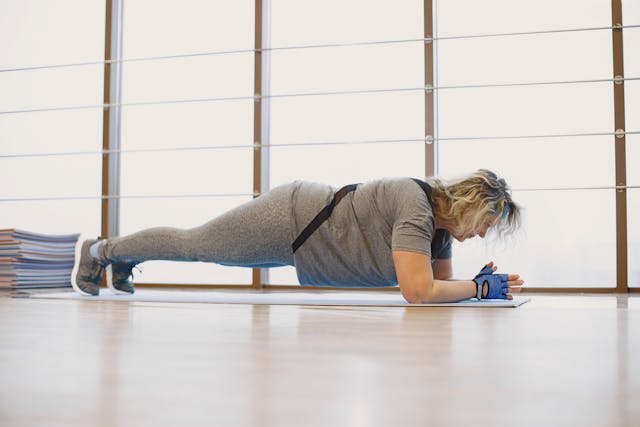
As stability improves, exercises become more challenging and functional. These may include planks, bridges, dead bugs, bird-dogs, and Pilates-based movements.
Movement Re-Education
Core strengthening is integrated into real-life movement patterns such as squatting, lifting, walking, and reaching. This helps patients use their core effectively during everyday activities.
Core Strengthening Beyond Exercise
Improving core strength is not limited to workouts. Daily habits also affect core stability and posture.
- Maintaining proper sitting posture
- Avoiding prolonged slouching
- Using ergonomic workstations
- Practicing good lifting mechanics
- Staying physically active throughout the day
Consistent movement and postural awareness help reinforce the benefits of strengthening exercises.
Who Benefits from Core Strengthening?
Nearly everyone can benefit from improving core stability, including:
- Individuals with chronic back pain
- Office workers with poor posture
- Athletes seeking performance enhancement
- Older adults improving balance and fall prevention
- Post-surgical patients rebuilding stability
- Pregnant and postpartum individuals
Core training is highly adaptable and can be modified for different ages, fitness levels, and medical conditions.
Conclusion
Core strengthening is important because the core muscles support posture, stabilize the spine, improve balance, and protect the body during movement. Weak core muscles can contribute to pain, poor movement mechanics, and increased injury risk. Physical therapy provides a structured and personalized approach to improving core stability through targeted exercises, movement training, and postural correction.
Building a stronger core not only improves physical performance but also supports long-term musculoskeletal health and everyday function.
ActiveCare Physical Therapy™
29 West 38th Street, Suite 601
New York, NY 10018
Phone: (212) 777-4374
Email: staff@bestptnyc.com
Website: https://activecarephysicaltherapy.com/