
 ActiveCare Physical Therapy, PC
29 West 38th Street
Suite 601
New York, NY 10018




* We Accept Medicare | No Fault | Workers Comp *
Sciatica Treatment with Physical Therapy: Non-Surgical Relief for Leg and Back Pain
Sciatica treatment with physical therapy is one of the most effective non-surgical approaches for reducing leg pain, improving mobility, and helping patients return to normal daily activities. Sciatica is not actually a diagnosis itself—it is a collection of symptoms caused by irritation or compression of the sciatic nerve, the largest nerve in the body. When this nerve becomes inflamed or compressed, pain can travel from the lower back through the buttock and down the leg, sometimes reaching the foot.
For many people, sciatica can make sitting, walking, driving, exercising, or even sleeping extremely uncomfortable. Fortunately, surgery is not necessary in most cases. A comprehensive physical therapy program can relieve pressure on the irritated nerve, improve spinal mechanics, strengthen supporting muscles, and address the underlying cause of the symptoms rather than simply masking the pain.
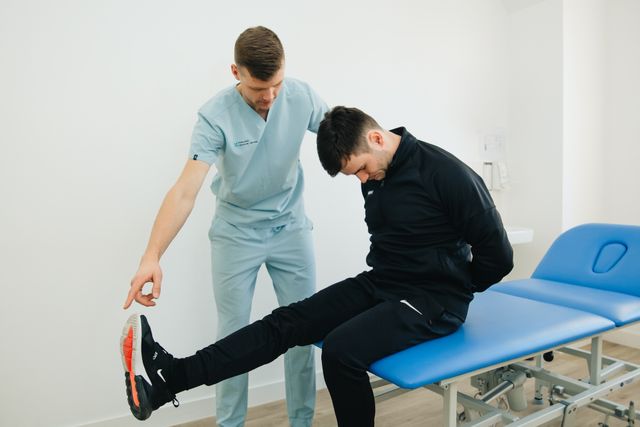
What Is Sciatica?
The sciatic nerve originates from several nerve roots in the lower spine before joining together and traveling through the pelvis, buttock, and down the back of each leg. When one or more of these nerve roots become irritated or compressed, pain follows the pathway of the nerve.
Sciatica is often caused by conditions affecting the lumbar spine rather than a problem with the nerve itself. Identifying the true source of the irritation is one of the most important parts of successful treatment.
Common Causes of Sciatica
Several conditions can produce sciatic nerve symptoms. Some are temporary and improve quickly with conservative care, while others require more extensive rehabilitation.
- Herniated or bulging discs: A disc pressing against a spinal nerve root is one of the most common causes of sciatica.
- Degenerative disc disease: Age-related changes can narrow the spaces where nerves exit the spine.
- Spinal stenosis: Narrowing of the spinal canal can compress nerve roots.
- Piriformis syndrome: Tightness or irritation of the piriformis muscle may compress the sciatic nerve in the buttock.
- Spondylolisthesis: A vertebra slipping out of alignment can place pressure on nearby nerves.
Determining which condition is causing the symptoms helps guide the most appropriate physical therapy treatment plan.
Recognizing the Symptoms of Sciatica
Sciatica symptoms vary widely depending on the severity and location of the nerve irritation. Some patients experience mild discomfort, while others have significant pain that limits daily activities.
Common symptoms include burning, sharp, or electric-like pain that travels from the lower back into the buttock and leg. Some individuals also experience numbness, tingling, muscle weakness, or increased pain while sitting for prolonged periods. Coughing, sneezing, or bending forward may worsen symptoms in some cases.
Interestingly, the intensity of leg pain is often greater than the discomfort felt in the lower back. This is one of the characteristics that helps distinguish sciatica from a simple muscle strain.
Why Physical Therapy Is Often the First Treatment Recommendation
For most people, conservative care is recommended before considering injections or surgery. Physical therapy addresses both the symptoms and the mechanical problems contributing to nerve irritation.
Rather than simply resting, which can actually prolong recovery in some cases, guided movement helps reduce inflammation, restore mobility, and improve spinal function. Treatment is individualized because not every patient responds to the same exercises or techniques.
Pain Reduction
The first goal of therapy is often reducing pressure on the irritated nerve. Depending on the cause of the sciatica, your physical therapist may use manual therapy, gentle mobility exercises, nerve gliding techniques, or specific directional movements that centralize pain away from the leg and back toward the spine—a positive sign during recovery.
Improving Mobility
Tight muscles surrounding the hips, pelvis, and lower back frequently contribute to abnormal movement patterns. Improving flexibility and restoring normal joint mobility helps reduce stress on the lumbar spine and surrounding tissues.
Strengthening Core Support
Weak abdominal, back, and hip muscles can increase stress on the spine during everyday activities. Progressive strengthening improves spinal stability, helping protect the lower back during lifting, bending, walking, and exercise.
Correcting Body Mechanics
Many episodes of sciatica are aggravated by poor posture, repetitive bending, prolonged sitting, or improper lifting techniques. Physical therapists teach patients how to move more efficiently to reduce future flare-ups.
What Happens During a Physical Therapy Evaluation?
An effective treatment plan begins with a thorough evaluation. Your physical therapist doesn’t simply treat where it hurts—they determine why it’s hurting.
The evaluation typically includes an assessment of posture, spinal mobility, hip flexibility, muscle strength, walking mechanics, balance, and neurological function. Special tests help determine whether symptoms originate from a lumbar disc, spinal stenosis, muscle tightness, or another condition.
This comprehensive evaluation allows therapy to be customized specifically to your condition rather than relying on a generic exercise program.
What Exercises Help Sciatica?
The most effective exercises depend entirely on the underlying cause of the nerve irritation. In fact, exercises that help one patient may aggravate another.
Treatment may include gentle lumbar mobility exercises, core stabilization, hip strengthening, stretching of tight muscles, nerve mobilization techniques, balance training, and progressive functional movements that simulate daily activities.
Your physical therapist will carefully monitor your response and adjust the program as your symptoms improve.
When Should You Seek Medical Attention?
Most cases of sciatica improve with conservative treatment, but certain symptoms require prompt medical evaluation.
You should seek immediate medical care if you experience severe leg weakness, loss of bowel or bladder control, numbness in the groin or saddle area, or rapidly worsening neurological symptoms. These may indicate a serious condition requiring urgent treatment.
For persistent leg pain lasting more than a week or two, early physical therapy can often speed recovery and reduce the likelihood of chronic pain.
Can Physical Therapy Help Prevent Future Episodes?
One of the greatest advantages of physical therapy is that it focuses on preventing recurrence, not simply relieving pain. Many patients recover from sciatica only to experience another episode months or years later because the underlying movement dysfunction was never corrected.
Through education, strengthening, posture training, flexibility exercises, and ergonomic modifications, patients learn how to protect their spine during work, exercise, travel, and daily activities. These long-term strategies can significantly reduce the risk of future flare-ups.
Move Beyond Sciatica Without Surgery
Living with sciatica can affect every aspect of your life, from work productivity to sleep quality and recreational activities. The encouraging news is that most people can recover without surgery when treatment begins early and focuses on the underlying cause of the nerve irritation. Karena Wu, PT, Board-Certified Clinical Specialist in
Orthopedic Physical Therapy, and the experienced clinicians at ActiveCare Physical Therapy develop individualized rehabilitation programs that help reduce pain, restore movement, and get patients back to living active, healthy lives.
Contact ActiveCare Physical Therapy
29 West 38th Street, Suite 601
New York, NY 10018
Phone: (212) 777-4374
Email: staff@bestptnyc.com
Website: https://activecarephysicaltherapy.com/